
To start your own hair extension brand in Australia, you need to: decide who you are selling to, choose your methods and range, find a genuine manufacturer (not a trading company), learn to judge hair quality yourself, build a consistent colour system, create your branding and packaging, price for wholesale and retail, and plan your launch. Below I walk through each step, based on what I have learned building my own range.
I ran a busy extension salon for years before I created my own range. The biggest lesson? The brands that last are the ones that truly understand their product, all the way back to the factory floor.
1. Decide who you are selling to
Before you look at a single supplier, get clear on your customer. Are you selling to salons and stylists (wholesale), directly to clients (retail), or both? Wholesale means bigger orders, trade pricing and education. Retail means stronger branding, marketing and customer service. Your answer shapes your range, your pricing and even your packaging.
2. Choose your methods and start with a focused range
Tapes, K-tips, nanos and wefts all suit different stylists and clients. You do not need every method, length and shade on day one. Start with the methods your customers already ask for, in your most popular lengths and colours, and expand once you know what sells.
3. Find a genuine manufacturer, not a trading company
Many "factories" online are actually trading companies: middlemen who buy from manufacturers and resell. That can mean higher prices, less control and inconsistent quality between orders. Signs you may be dealing with a trading company:
- They sell almost every hair product imaginable, from wigs to lashes
- They cannot (or will not) show you their production process
- Their quality claims are all labels, like "Russian Remy", "AAA+" or "12A", with no detail behind them
- Samples are great, but bulk orders are noticeably different
A genuine manufacturer can explain where their hair comes from, how it is processed and how they control quality, and is happy for you to see it.
4. Learn to judge hair quality yourself
Labels in the hair industry are largely unregulated, so the only protection you have is your own knowledge. Learn how to check cuticle direction, weight and thickness from root to tip, colour consistency, and how the hair behaves after washing, toning and heat. Test samples properly before you commit to a bulk order, and keep testing every new batch.
5. Build a consistent colour system
Your colour ring is one of your most important sales tools. Stylists need to trust that a shade they order today will match the one they ordered last month. Work with your manufacturer on clear colour references and blending ratios, and check every delivery against your ring.
6. Create your branding and packaging
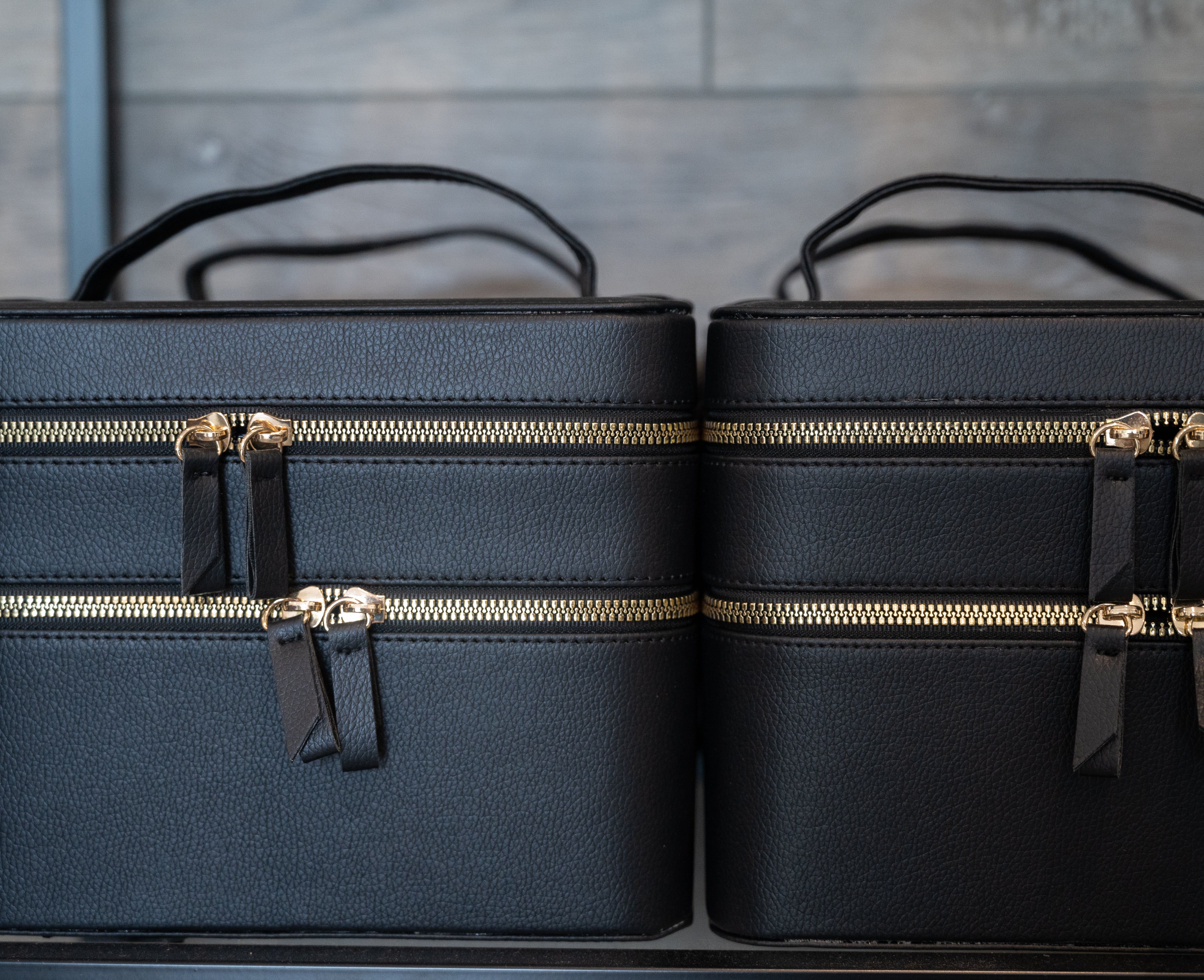
Your brand is what turns good hair into a business. Think about your name, your story, who you are for, and how your packaging feels in a stylist's hands. Professional, consistent packaging builds trust with salons and makes your range easy to recognise.
7. Price for wholesale and retail
Work out your true landed cost first: the hair itself, shipping, import costs, packaging, payment fees and your time. Then set wholesale pricing that leaves room for salons to make a profit, and retail pricing that reflects your brand. Speak to your accountant or a customs broker about import duties and GST on imported goods before your first order, so there are no surprises.
8. Plan your launch
Send samples to the stylists you want to work with, educate them on your product, and share real results on social media. Collect reviews early. Education is what turns a one-off order into a loyal trade customer.
Why seeing the factory changes everything
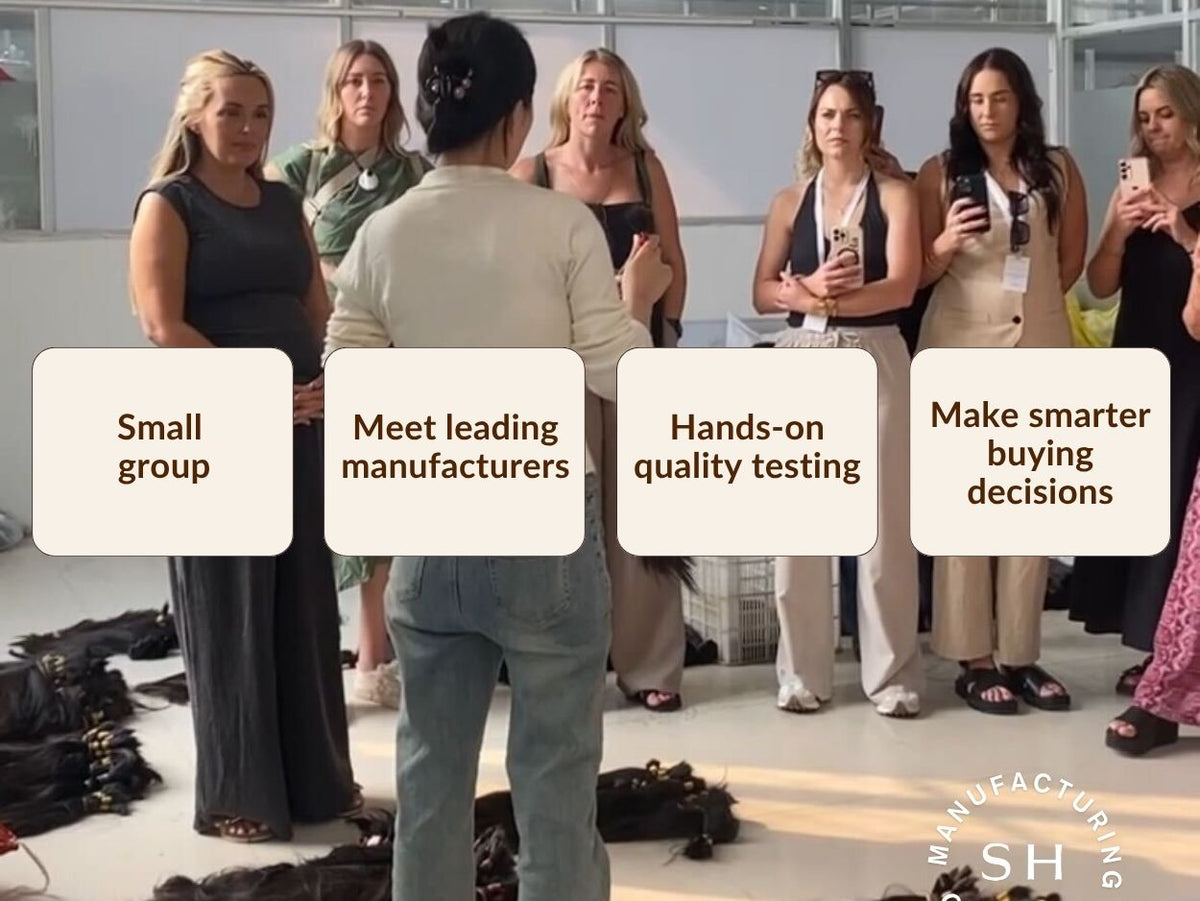
In 2023 I travelled to China to learn everything I could about hair processing, sourcing and ethical manufacturing. Seeing the process with my own eyes completely changed my business, and it is why I now take a small group behind the scenes each year.
On my China Manufacturing Tour, you visit the factories with me, learn to test hair quality hands-on, and leave with supplier connections, a product development workbook and a plan to launch your own range. The next tour runs from 17 to 24 April 2027 and is strictly limited to 15 places.
Find out more about the China Manufacturing Tour →
Frequently asked questions
Do I need to visit China to start a hair extension brand?
No, but it helps enormously. Seeing the factory lets you confirm you are working with a genuine manufacturer, understand how your hair is processed, and build a relationship that protects your quality long term.
What is the difference between a manufacturer and a trading company?
A manufacturer processes the hair in its own factory. A trading company buys from manufacturers and resells, which usually means higher prices and less control over quality and consistency.
What should I check before placing my first bulk order?
Test samples for cuticle direction, weight, colour match and how the hair behaves after washing and toning. Confirm the bulk order will be made to the same standard, and get your colour references agreed in writing.